Neuroqueer Double Masking Fatigue: Why Existing Feels So Exhausting
Growing up in a collectivistic and conservative culture, I learned very early that I had to constantly adapt how I showed up, and which parts of myself were allowed to be seen, depending on who was around.
I wore certain outfits with this friend group and different ones with that group.
I talked about some topics with one clique and intentionally played it cool with another, because there was always an image to maintain.
There were things I felt I had to do when certain “popular” peers were around, and other moments when I could finally let my hair down.
All of this was shapeshifting.
I first heard that word in conversation with neurodivergent folx, and it landed deeply. Because shapeshifting is really just another way of describing masking.
Wait, what is neuroqueer masking?

Neuroqueer masking refers to the conscious and subconscious ways neurodivergent and LGBTQIA+ folx constantly adjust how we behave, communicate, move, or express ourselves in order to fit into environments that weren’t designed for us.
This can include hiding stims, forcing eye contact, changing how we speak, dressing differently, or downplaying our queerness, all in the name to stay safe, accepted, or unnoticed.
Neuroqueer masking isn’t about being fake.
It’s about SURVIVAL.
Wondering how to tell if you’ve been masking?

See if any of these feel familiar:
Have you forced yourself to stay at a hangout even though you wanted to stim, pace around the room, or put on noise-cancelling earbuds, but you didn’t, because that might look “weird”?
Have you intentionally chosen clothes or hairstyles that felt more acceptable, even though you wished you could present differently?
Have you rehearsed conversations , even something as simple as answering “How are you?” so the interaction would feel smoother for the other person?
Have you forced eye contact out of fear of being seen as rude, even though scanning the room or looking away felt more better?
If you’re nodding along (to one or more), you’re in very good company.
[Psst,.. I’ve experienced all of this myself, and so have many of my neuroqueer clients.]
Masking often means monitoring not just what we say, but how we say it,
how it might land, and how to adjust ourselves so no one else feels uncomfortable.
Over time, the focus shifts outward, onto the other person and the environment.
Showing up as ourselves starts to feel risky, because being authentic could mean being seen as “weird,” or worse, becoming a social pariah.
So masking becomes our go-to strategy in the moment. It helps us blend in, smooth things over, and stay socially accepted. In many ways, it even makes us incredibly adaptable — just at a cost we don’t always notice right away.
Why is neuroqueer masking so exhausting?
Masking is a form of emotional labour.
We’re constantly monitoring, correcting, suppressing, and camouflaging parts of ourselves to fit into what’s considered socially acceptable. While this can help us get through the moment, it comes at a cost.
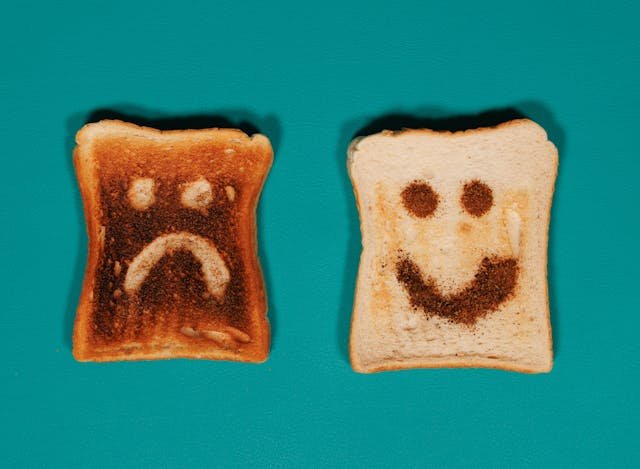
Neuroqueer masking isn’t inherently harmful, it often starts as a protective AND survival strategy. But when it becomes constant, it disconnects us from who we really are. We spend so much energy scanning our surroundings and asking Which version of me is safe here? that we lose touch with ourselves altogether.
Even helpful coping strategies can backfire when they’re used nonstop.
What does neuroqueer masking burnout feel like?
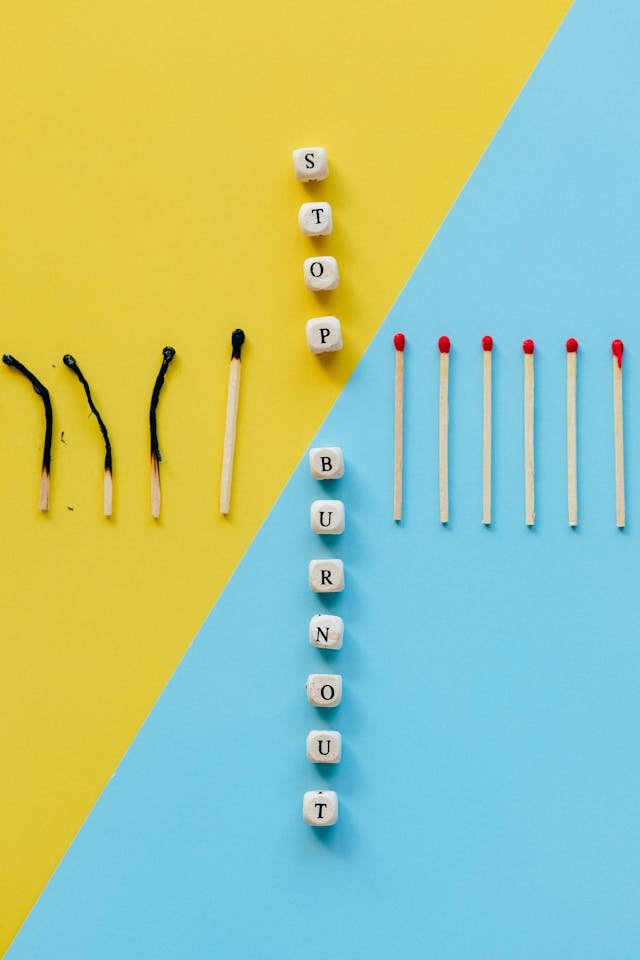
Masking burnout doesn’t arrive all at once.
It builds slowly, one disconnection after another, until the mind and body simply can’t hold it anymore. Many neurodivergent folx describe this as masking burnout, feeling so depleted that goes far beyond being exhausted.
You might notice emotionally numb, completely checked out, super detached from yourselves and what’s around you .To the extent that even basic tasks, like calling a dental office to confirm your appointment or meal planning, felt super overwhelming.
If this sounds familiar, you might find it helpful to explore more about neurodivergent burnout and how chronic masking impacts long-term wellbeing.
For many neuroqueer folx, this burnout is intensified by something else: double masking.
Wait, what is neuroqueer double masking?
Neuroqueer double masking is the ongoing attempt to conceal both our neurodivergent traits and our queer identity in order to fit into cis-, hetero-, and neuro-normative spaces.
As someone who is neuroqueer myself, I know that heightened self-awareness well, that internal pressure that whispers, This would be easier if I just roll along with the punches.
I remember being in small group meetings where the facilitator addressed everyone as “ladies and gentlemen,” and then being referred to using she/her pronouns even while I was wearing a clear they/them pin
I cringed internally.
I noticed the urge to correct them, to clarify my pronouns, and then I stopped myself. I chose silence, because speaking up felt like it might make the facilitator, and everyone else in the room, uncomfortable.
There were also moments when my brain quietly rolled its eyes while listening to conversations about how staying loyal and committed to one partner was the only way to do relationships.
My neuroqueer brain knew that there are many valid ways to love and connect.
While I felt the impulse to ask questions, to gently challenge the assumption, or to name my own values, then I decided to hold that back. I didn’t know these folx well enough, and wasn’t sure whether they were open to hearing anything different, or whether doing so would turn me into that person in the room.
In those moments, I wasn’t just hiding one part of myself.
I was suppressing my gender, my queerness, my values, and my natural neurodivergent ways of responding and engaging, all at once.
I was constantly scanning, adjusting, and emotionally regulating,
not for my own comfort, but to maintain ease for the people around me.
That’s what neuroqueer double masking can look like:
layered self-suppression in the name of safety, harmony, and belonging.
Why is neuroqueer double masking burnout so exhausting?
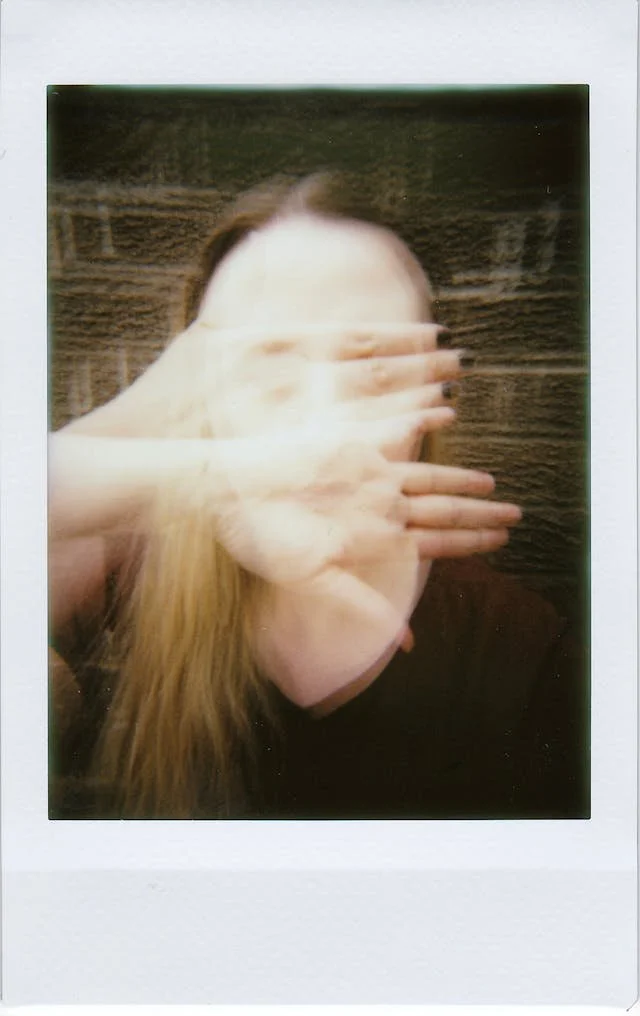
Double masking forces us to constantly contort ourselves into whatever version feels most acceptable in the room.
Pushing down sensory needs or aspects of ourselves while hiding or minimizing our queerness takes a massive amount of energy.
I didn’t fully realize how exhausted I was until I finally found my people, my chosen family, if you catch my drift ;)
Before that, it felt like living a double-agent life — constantly code-switching, adopting different language, mannerisms, and identities depending on the space. While code-switching can sound impressive on the surface, it requires intense cognitive and emotional effort over time.
Eventually, I withdrew and became more of a hermit at some point, which confused people who knew me as the “social butterfly.”
What they didn’t see was the constant internal calculation it took just to show up.
When survival becomes exhaustion for neuroqueer folx…
Shapeshifting can feel powerful at first.
But burnout isn’t just tiredness — it’s existential depletion.

You might look “fine” on the outside while a part of you quietly wilts inside.
Confusion sets in.
Shame creeps up.
Self-connection fades.
If this feels familiar, there’s nothing wrong with you. Your nervous system has been working overtime, trying to keep you safe while receiving mixed messages about belonging.
Learning more about nervous system regulation can be a gentle first step toward understanding what your body has been holding.
For many neurodivergent and trans folx, the pressure to hide parts of ourselves delays self-discovery, sometimes well into adulthood. I’m one of those coming-out-later-in-life folx too, and I’ve shared more about that in my writing on coming out later in life.
A gentle invitation forward to my neuroqueer folx out there
If any part of this resonates and you’re feeling both drawn and hesitant at the same time, know that is totally normal! In fact, you’re in good company.
Unmasking doesn’t mean ripping everything off at once.
I often talk about identity like a pizza 🍕 you don’t have to gobble the whole thing in one sitting. You can take it slice by slice, at your own pace. If that metaphor speaks to you, you might appreciate my post on the pizza of our whole identity:
And if you’re longing to explore this with someone who understands neuroqueer masking, burnout, and identity fatigue, walking with a neurodivergent- and queer-affirming counsellor can make this process feel far less lonely.
We can gently peel back the layers together, one slice at a time.

Hello, I’m Nita Agustin
Registered Clinical Counsellor based in Burnaby, BC
My jam is helping curious and questioning queer youth and young adults move from confusion to clarity.
Most of my clients shared feeling overwhelmed by the messages the world told them how they’re supposed to be. They do not want to be defined by what society told them about themselves.
In our work together, I guide clients in figuring out who they are, who they want to be, and how to get there. We do this by processing how their past impacted the way they live out their life today. From our work together, I noticed clients develop better self-awareness and experience improved quality of life as they can show up differently in their relationships.
I offer virtual and in-person sessions in Brentwood, North Burnaby. In the summer I also offer walk-and-walk in Confederation Park.
I am licensed to practise in BC, as well as all across Canada, so I support clients all over BC, all the way from Vancouver to Kitimat. Other than working with clients who reside in BC, I also can support clients who reside in Yukon Territories, Northwest Territories, Nunavut, Saskatchewan, Manitoba, and Newfoundland.
Check out my About me page to learn more about what I do and have to offer for you. Also, explore my Services page to see how I can guide you in making shifts in your life today. If you feel ready to discover ways to live life on your own terms, I welcome you to book an initial intake session. I am so stoked to meet you and start figuring out how you can show up as your best self!
Throughout this pandemic, I witnessed telehealth virtual sessions become more of a norm, and it has been super transformative seeing clients can access mental health services from the comfort of their home.
There are lots of different stereotypes out there, and society tells us who we are supposed to be and what we are supposed to do in the world. It can feel very overwhelming and confusing to compare our personal experience against those ideas. The thing is, you no longer have to be defined by what society tells you. It is your life to live, and you get to decide who get a say about your life.