
Am I Trans Enough Without Surgery or Hormones? Let’s Talk

Heya folx,
I felt moved to write this piece after hearing the same question come up again and again: “I wonder if I am trans enough.”
I heard it while completing hormone readiness assessments, and I’ve heard it in counselling rooms too.
So, if you know that you don’t identify as cisgender, but you’ve wondered whether you are “trans enough” because you don’t want hormones, surgery, or the whole shebang of medical transition, this article is for you.
Coz what does it actually mean to be trans?
And who gets to decide?
My hope is that by the end of this article, you’ll have a little more room to breathe around your identity.
You don’t have to meet someone else’s checklist to be trans. You don’t have to look a certain way, transition a certain way, or feel 100% certain every single day.
Most importantly, I hope you can begin separating two very different questions:
“What does my gender mean to me?”
and
“Am I legitimate enough for other people to believe me?”
Those are not the same question.
Why the Heck Does the Question “Am I Trans Enough” Even Exist?

Truth be told, I personally identify as gender non-conforming.
I was assigned female at birth, and navigating the world through the overlapping lenses of being queer, gender non-conforming, and a person of colour has been… multilayered. Interesting. Sometimes exhausting. Often both!
Being non-binary or gender non-conforming can be complex and loaded.
How dare we sit outside the prescribed binaries that society has decided are normal or acceptable?
It can be tough explaining yourself to someone whose understanding of gender is shaped by a very rigid idea of how people are “supposed” to look, behave, dress, or identify.
When I first adopted they/them pronouns, I was often asked, “Why?”
And sometimes people would say things like, “But you don’t really look like a they/them.”
Is there a certain way to look like a they/them?! You tell me. LOL.
I know that many people who made these comments probably didn’t have any ill intention. Still, those comments could sting.
Because when people repeatedly question something about you, it can eventually make you question yourself.
I started wondering whether I had the right to call myself transgender.
Am I trans enough?
That doubt can be sneaky.
It can feel like we are gaslighting ourselves: Is my experience real?
Am I interpreting myself correctly?
Am I allowed to call myself this?
Is the way I show up legitimate?
And when those questions keep piling up, we can start wondering whether we are gender non-conforming enough. Trans enough. Queer enough.
At one point, feeling like I didn’t quite fit into either the cisgender world or the broader trans community left me feeling incredibly lonely and invisible.
Ever Wonder Am I the Only One Asking “Am I Trans Enough”?
If you’ve ever sat there wondering whether you are trans enough, please know this:
You are not the only one asking.

The question “Am I trans enough” is more common than you might think.
The more I talk about it, the more I realize how many queer and gender non-conforming folx carry some version of this doubt.
I’ve noticed these themes time and again with trans and gender non-conform
ing clients who question their identity because they don’t take hormones or haven’t had, or don’t want, surgery.
Sometimes there is an assumption that being trans has to look a certain way.
Maybe it means taking testosterone or estrogen.
Maybe it means changing your name.
Maybe it means changing your clothes
.
Maybe it means surgery.
Maybe it means wanting every possible gender-affirming intervention.
But what happens when you identify as trans and yet don’t want those things?
Or maybe you want some of them, but not others?
Or maybe you’re still figuring it out?
This is exactly why, when I complete a hormone readiness assessment, I often begin by saying:
“I’m not here to be the judge who measures how trans you are. I’m here as a listener and witness to your gender identity journey. You get to decide what you feel comfortable sharing as we explore ways to bring more alignment to who you are.”
It’s interesting how disarming those words can be.

I’ve watched someone come into the room looking tense and unsure, and then slowly melt into a more comfortable position in their chair after hearing that.
One person even said, “Whoa. I wasn’t sure how this meeting was going to go. I thought you were going to push me one way or the other.” And we just chuckled together.
Coz honestly?
You gender is not an exam I am here to grade.
Where Does “Am I Trans Enough” Actually Come From?
I could probably write an entire blog post about this topic alone!
But for now, let’s talk about one piece of it.

The question “Am I trans enough?” can develop in response to cisnormativity, heteronormativity, and what is sometimes called transnormativity.
There are often unspoken rules about how gender is “supposed” to look.
Certain bodies are treated as masculine.
Certain bodies are treated as feminine.
Certain ways of dressing are considered appropriate for one gender or another.
Certain transitions are treated as more legitimate than others.
These rules may not always be said out loud.
But when we step outside them, we can quickly learn that there are consequences.
We may be questioned.
Corrected. Misgendered. Mocked. Excluded.
Or simply made to feel like we are somehow doing gender “wrong.”
And here’s the tricky part:
Even when we intellectually reject these messages, our nervous systems can still absorb them.

We can know, logically, that there is no single way to be trans while still feeling our stomach drop when someone questions our identity.
We can know that gender expression does not determine gender identity while still wondering whether our clothes are “trans enough.”
We can believe that medical transition is not a requirement while still wondering whether other people will take us seriously if we don’t pursue it.
This is one of the ways social messages can get internalized.
We don’t have to consciously agree with a message for it to affect us.
It’s a little like hearing the same song playing in the background for years. Eventually, you may find yourself humming it without realizing where you learned the tune.
Protecting Our Sanity in a World That’s Confusing

When we are constantly surrounded by messages that make us doubt ourselves, it makes sense that we might develop ways of protecting ourselves.
Some transgender folx mask parts of themselves to make navigating the world feel more doable.
Some experience hypervigilance, scanning their surroundings for potential threats, thinking ahead about who might be at a particular place, or wondering whether it will be safe to share certain parts of themselves.
And some people engage in what might look like self-policing.
We might think:
Who is safe to tell?
When do I use my pronouns?
Where can I be fully myself?
Who gets to know this part of me?

I actually think there can be something powerful about this.
Choosing who, when, where, and how we share our identity can be a way of reclaiming agency.
We get to decide what parts of ourselves we offer, and to whom.
Sometimes that internal control gives us a little more predictability in a world that can feel unpredictable.
In some situations, choosing what to share can feel safer than being publicly questioned.
I experience this myself.
Although I personally see myself as gender non-conforming, I now only bring up my they/them pronouns around certain people.
I don’t personally experience this as self-policing or self-censorship.
For me, it feels more like a personal invitation.
A way of saying, If I’m letting you into this part of me, I’m inviting you a little closer.
And honestly, that could be a whole blog post of its own!
“Am I Trans Enough” Can Actually Signal Deep Reflection
Here’s a gentle reframe I want to offer you:
The fact that you are asking “Am I trans enough?” may actually tell us something about how deeply you are reflecting on your identity.

You are paying attention.
You are noticing what feels aligned and what doesn’t.
You are thinking about how you want to move through the world.
You may be trying to understand the relationship between how you experience yourself internally and how you are seen externally.
That isn’t a weakness.
In fact, there can be something really beautiful about being thoughtful about how you show up in the world and whether that feels connected to how you experience yourself inside.
And here is an important distinction:
Questioning your identity is different from questioning your legitimacy.
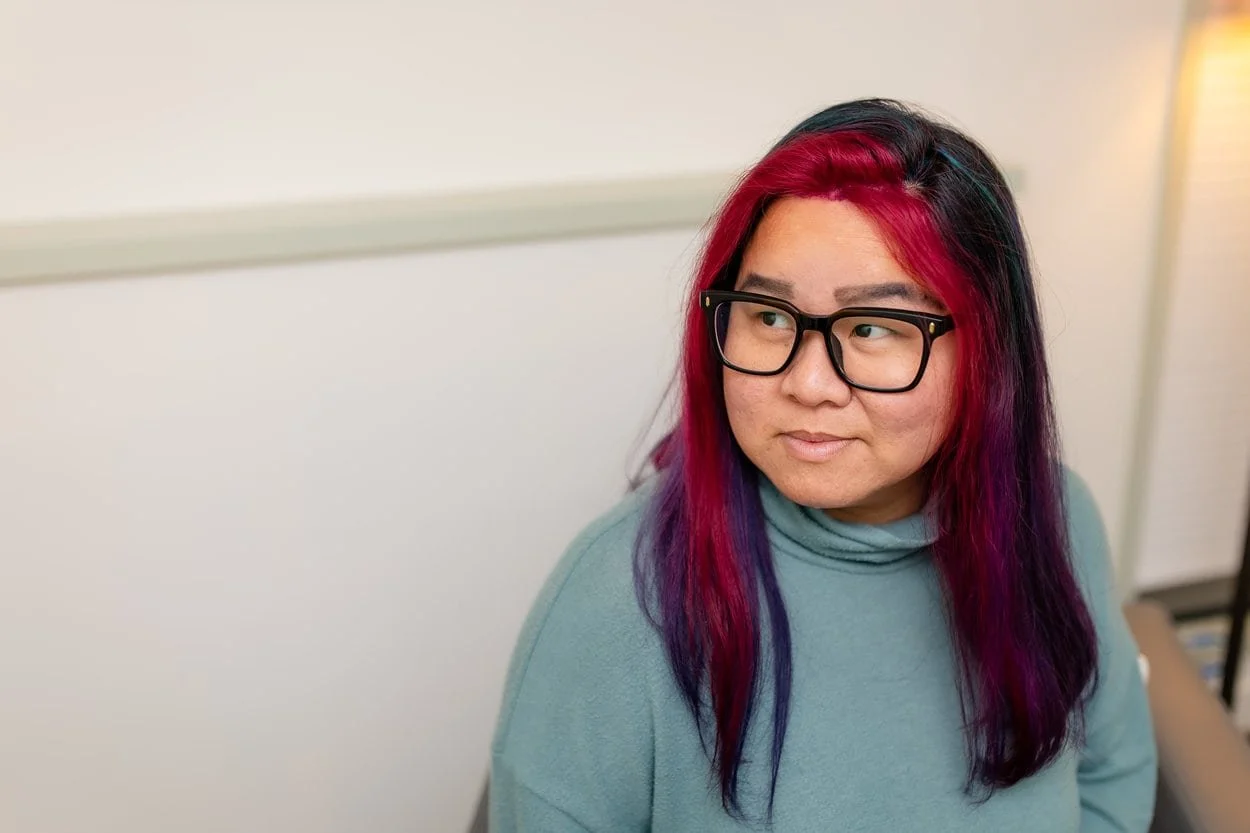
You are allowed to wonder, “What does gender mean to me?”
You are allowed to explore, “Do I want hormones?”
You are allowed to wonder, “Would surgery feel right for me?”
You are allowed to change your mind.
You are allowed to take your time.
But those questions don't automatically mean:
“Am I legitimate?”
“Am I allowed to call myself trans?”
“Will other people believe me?”
Doubt does not equal a lack of authenticity.
You can be uncertain and still be real.
Transforming “Am I Trans Enough?” Into “Heck Yeah, I Am Trans!”
So what if we started shifting the question?
Instead of:
“Am I trans enough?”
What if we asked:
“What does being trans mean to me?”
Instead of:
“Do I meet the criteria?”
What if we asked:
“What feels affirming and aligned for me?”
Instead of:
“Will other people believe me?”
What if we asked:
“Do I believe myself?”
And maybe, eventually, there is room for:
“Heck yeah, I am trans.”
Not because someone else gave you permission.
Not because you checked every box.
Not because you had surgery.
Not because you take hormones.
Not because you present a certain way.
Because you know yourself.
And if you’re still figuring yourself out?
That’s okay too.
You don’t need to have your entire gender mapped out before you are allowed to explore it.
You Don’t Have to Figure Out “Am I Trans Enough?” On Ur Own
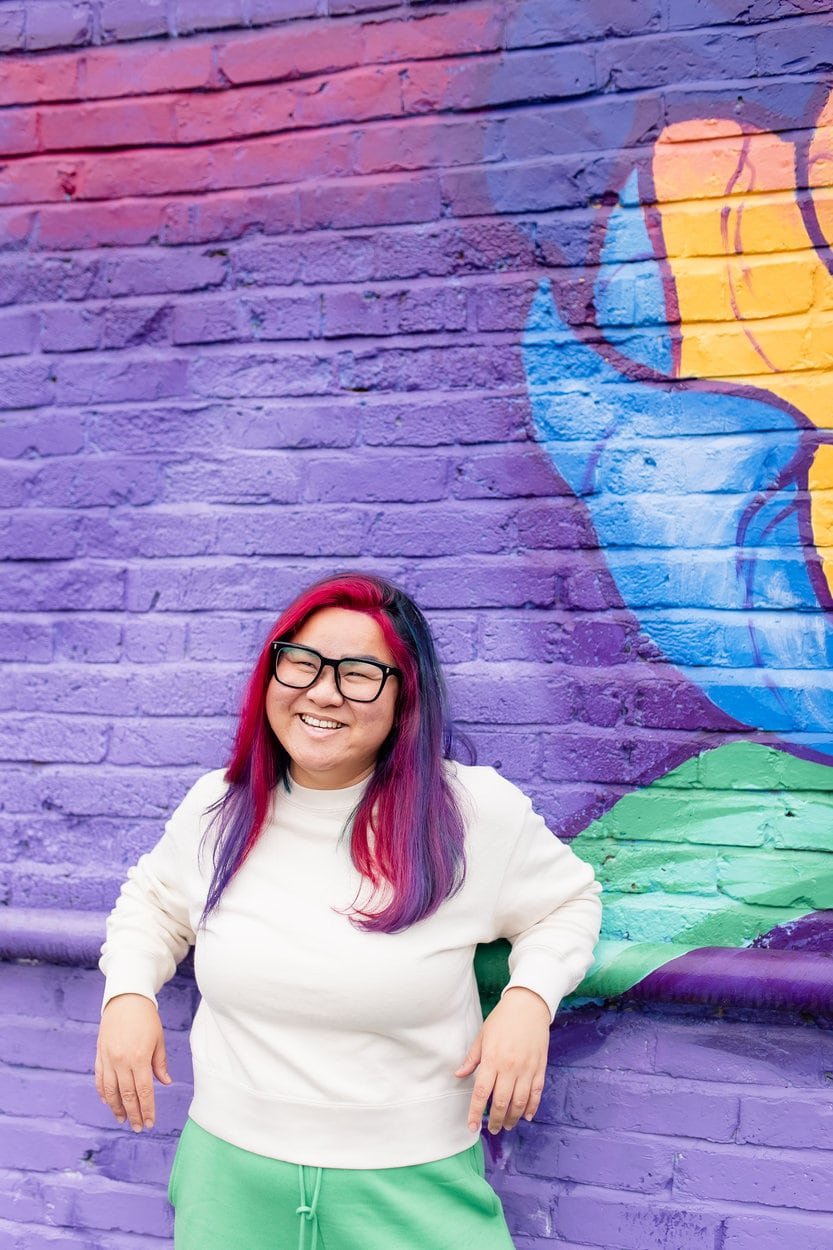
If the question “Am I trans enough?” keeps showing up, I am not here to convince you that you are or aren’t trans.
A gender-affirming therapist can offer a space where your identity isn’t evaluated or tested.
Instead, therapy can be a place to slow things down and get curious.
We can explore:
Where your doubts came from
Which messages about gender you may have absorbed
What gender means to you personally
What kinds of social or physical changes feel affirming
What you want — separate from what you think you should want
How to build greater trust in your own experiences
How to navigate coming out, pronouns, relationships, family, work, or community
For me, therapy isn’t about deciding whether someone is “trans enough.”
It’s about helping you understand your experience.
There is no gender test at my office. No measuring tape.
No secret checklist hidden under my desk.
Just curiosity, compassion, and a place where you can take your time figuring out what feels true for you.
Because your gender belongs to you. And you don’t have to prove it to me.

Hello, I’m Nita Agustin
Registered Clinical Counsellor based in Burnaby, BC
My jam is helping curious and questioning queer youth and young adults move from confusion to clarity.
Most of my clients shared feeling overwhelmed by the messages the world told them how they’re supposed to be. They do not want to be defined by what society told them about themselves.
In our work together, I guide clients in figuring out who they are, who they want to be, and how to get there. We do this by processing how their past impacted the way they live out their life today. From our work together, I noticed clients develop better self-awareness and experience improved quality of life as they can show up differently in their relationships.
I offer virtual and in-person sessions in Brentwood, North Burnaby. In the summer I also offer walk-and-walk in Confederation Park.
I am licensed to practise in BC, as well as all across Canada, so I support clients all over BC, all the way from Vancouver to Kitimat. Other than working with clients who reside in BC, I also can support clients who reside in Yukon Territories, Northwest Territories, Nunavut, Saskatchewan, Manitoba, and Newfoundland.
Check out my About me page to learn more about what I do and have to offer for you. Also, explore my Services page to see how I can guide you in making shifts in your life today. If you feel ready to discover ways to live life on your own terms, I welcome you to book an initial intake session. I am so stoked to meet you and start figuring out how you can show up as your best self!
Throughout this pandemic, I witnessed telehealth virtual sessions become more of a norm, and it has been super transformative seeing clients can access mental health services from the comfort of their home.
There are lots of different stereotypes out there, and society tells us who we are supposed to be and what we are supposed to do in the world. It can feel very overwhelming and confusing to compare our personal experience against those ideas. The thing is, you no longer have to be defined by what society tells you. It is your life to live, and you get to decide who get a say about your life.